Medical aesthetics · Sarasota, US
She had spent thirteen years mastering clinical skincare inside other people’s practices. When she opened her own, the only people who could see her caliber were the ones who already knew it.
In a city with a spa on nearly every corner, the founder opened her doors with something rarer than a good location: thirteen years of clinical experience, a portion of it in dermatology, and a following of clients who booked her by name. The new practice was built on a conviction the local market had split down the middle: that a client should never have to choose between real results and real indulgence. Every spa around her offered one or the other. She built for both, with medical-grade treatments and time actually built into each appointment, because she had watched what rushed rooms cost the relationship. In her words, it was always more than a facial.
Her loyal clients came with her. The clients she had not yet met were the challenge. The business was brand new, and bookings were slow out of the gate in exactly the way that stings most: the website had visitors, and the visitors did not book. Her read was traffic. More search, more ads, perhaps social media, which she had no appetite for being in front of. Before spending on any of it, she asked us to find what was actually in the way.
So we read the practice the way a first-time visitor would, arriving cold from a search result. The credentials were real but buried. The clinical depth was invisible. A do-it-yourself website was representing a medical-grade practice, presenting thirteen years of clinical expertise with the polish of a weekend project, and the brand read younger than the work. Traffic, at that moment, would have introduced a premium practice as an ordinary one, and first impressions are rarely offered twice.
Her existing clients knew her caliber. A first-time visitor couldn’t see it.
This is the ordering problem that quietly wastes more marketing budgets than any other. Traffic is a multiplier, not a message. Send it to a brand that undersells the practice and it does not build authority; it manufactures underwhelming first impressions at scale, one search result at a time. The research is blunt on this point: in Stanford’s web credibility study, visual design was the single most-cited reason people gave for judging a site credible, named more often than any other factor.1 For a practice offering medical-grade care, the stakes run higher still: in research on health websites specifically, 94 percent of the reasons people gave for mistrusting a site were design-related.2
So positioning came first. The brand was rebuilt around what was already true: the credentials placed where a stranger would look first, the copy rewritten to say plainly what she does and for whom, the visual identity brought up to the level of the treatments themselves. The do-it-yourself website was retired, and a new one designed to match.
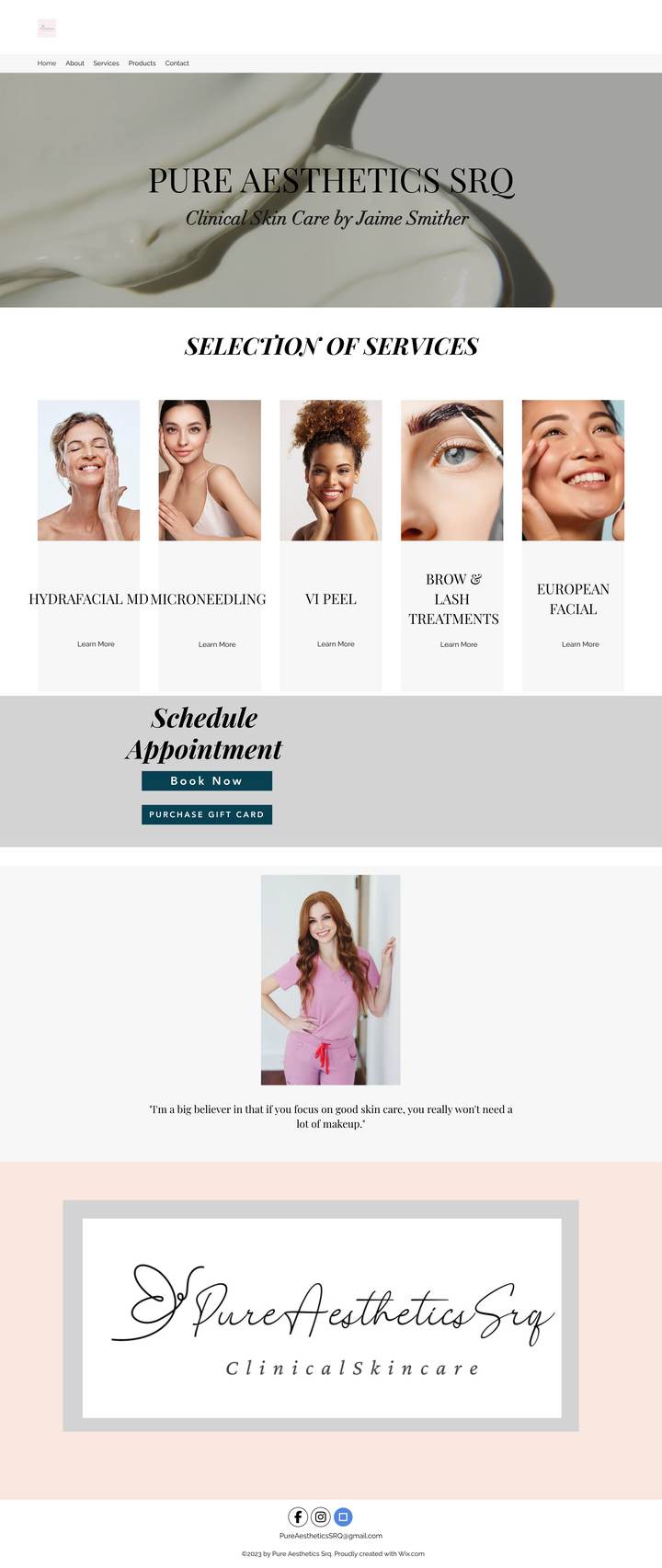
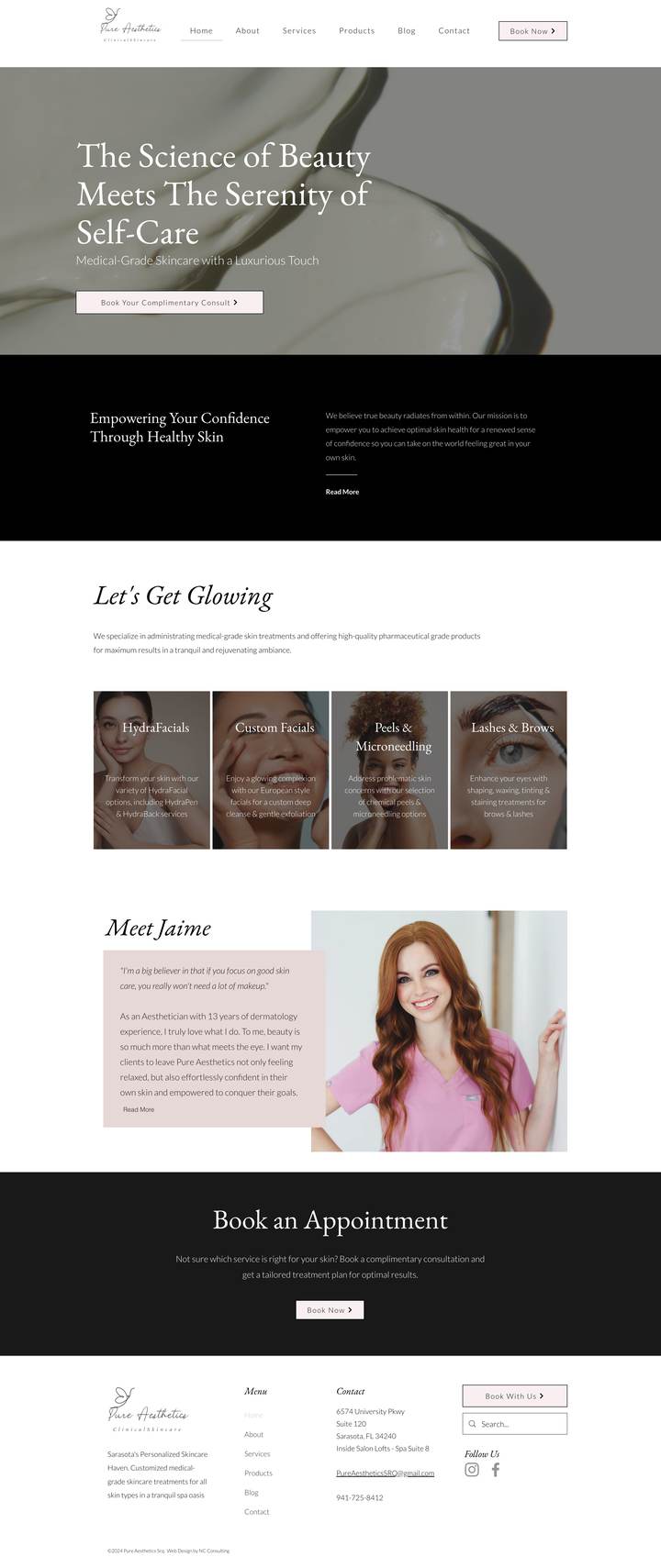
One refresh, not a rebuild: her existing site, elevated. Smoother navigation, improved UX and UI, clearer messaging, and a brand feel raised to the level of the practice.
Then the machinery. Her back-end booking system was connected to the new website, so a stranger could move from first click to booked appointment without friction. A blog gave the practice a voice that search engines could find. Her social channels were connected into the same system, with a Facebook content strategy matched to the site’s visuals, so every channel told one story. The search presence was rebuilt around the brand’s own terms.
Only then did visibility get its turn. And it behaved differently, because every visitor it delivered now met the practice at its true level.
Bookings rose with the traffic, and the new clients arriving were matched to her caliber of work: people who wanted exactly what she had built, results and relaxation in the same chair, without being made to choose.
The same is true for the consultant going independent, the clinician opening her own doors, the specialist finally working under her own name. A practice built on deep experience deserves to be introduced at its true level, and the introduction is work that comes before visibility, not after it.
Positioning first, visibility second. When the brand matches the mastery, every marketing dollar that follows works harder.
“Nikki helped me re-vamp my website into exactly what I was looking for, which was elegant, simple, clean and user friendly. She was wonderful to work with and truly cares about you and your business. I will continue working with Nikki for all my future needs.”
Work shown as delivered at the time of the engagement. Figures are year over year from that period.

If your brand is younger than your experience, the introduction is the work. Begin there.
InquireQuestions first